
Is Google Ads Worth It for Small Businesses in 2026?
July 1, 2026
Ever Googled “Is Google Ads worth it for my small business in Sydney?” while staring at a $2000 monthly ad bill with very little ROI to justify it? If yes, you’ll want to read further.
The short answer to kill your suspense is, yes, you do need Google Ads. But the long answer is more complicated than you think: it only works if the campaign is set up properly, consistently managed, and perfectly matches your business type.
For big businesses with big budgets, the situation is different, which we’ll talk about in another blog. But for small businesses, you must understand some critical factors before spending a single dollar!
Why Are Sydney Small Businesses Turning to Google Ads?
Google currently holds around 90% of the global search engine market share, with over 8 billion searches every day. Now, the question is,
Among those 8 billion+ people, are your customers finding you?
Google Ads, when used correctly, puts your business at the top of those search results immediately. And by immediate, I mean you don’t have to wait 6 months for SEO to kick in. The moment your campaign goes live, your ad can appear in front of someone actively searching for what you sell.
Disclaimer: SEO is slow, but organic search is absolutely crucial for your business’s success. Google Ads gives you an instant boost in clicks. The moment you stop spending on ads, the traffic and revenue stop.
For many small businesses in Sydney, such as trade services, allied health, legal, finance, and local retail, speed is the whole point. If you need leads now and you can’t afford to wait for organic rankings to build, Google Ads is one of the few channels that delivers fast.
Like to learn more? Read about SEO services here.
What Makes Google Ads Different From Other Paid Channels?
Most advertising puts your message in front of people who weren’t looking for you. A Facebook ad interrupts someone midscroll, a billboard catches someone’s attention while driving to work; these channels work for awareness, but they’re cold.
On the other hand, Google Ads captures existing demand. When someone opens Google and types, “emergency plumber Sydney” or “residential electrician Sydney,” they are ready to act.
Now imagine you’re running an ad on these exact keywords, ranking well, and meeting them at the exact moment they’re ready to buy or act! That’s exactly why Google Ads is particularly well-suited for service-based businesses in Sydney, where most customers decide within hours of their first search.
The platform also runs on a pay-per-click model, meaning you only pay when someone clicks through your site. So basically, you’re not paying for eyeballs, you’re paying for interest.
What Does Google Ads Actually Cost in Australia?
The cost of any service is what mostly makes or breaks a deal, so let me set this up for you clearly so that when you’re out in the market searching for the right person, you already know what budget to keep in mind.
According to WebFX’s 2026 Google Ads benchmarks, the average cost per lead for search ads ranges from $6-$30 (this can vary significantly by industry).
Legal and financial services can go well above $30 per click in extremely competitive Australian markets. Trade services and health typically sit somewhere in the middle,
As a rule of thumb, for most small businesses in Sydney, a realistic starting budget for ad spend is $1,000 to $2,000 per month. Going below $500 a month usually doesn’t generate enough data for Google’s AI bidding systems to learn from, which means your campaign never really gets a chance.
What Is the Expected ROI On Google Ads?
Now, let’s talk about the ROI in your ads (we know this is the part you’re really interested in).
According to WebFX, Google ads deliver approximately 800% return on investment. This means a well-optimised campaign can push that closer to $8 per $1 spent.
Search ads convert at between 3% and 6%, which is significantly higher than most other digital channels.
How Is the Digital World Shifting in 2026 (And Why More People Are Frustrated About It)
We are living in a world where technology is moving faster than ever before. We’ve never experienced such enormous advancements in such a short time as we see today.
So, the reason the question “Is Google Ads even worth it anymore?” is popping up more is that the platform itself has changed significantly. And the changes are often not in favour of small budgets.
Shopify states that cost per click has risen roughly 87% in most industries year on year since 2025. In some competitive sectors like legal, insurance, and finance, average CPCs (Cost Per Click) in Australian markets have pushed well above $30 per click. And for beauty and personal care, we’ve seen a substantial 40% rate increase.
With more businesses entering the auction and AI-driven searches, prices are being pushed up across the board.
According to Performance Max campaigns, Google has also shifted heavily towards automation and away from manual control, running across Search, Display, YouTube, Gmail, and Maps all at once from a single budget.
For larger businesses, with strong conversion data and high ad spending, this can work well, but for small Sydney businesses, it often spreads spend too thin across channels. It reduces visibility, so you can’t see the driving results.
The other 2026 shift worth knowing about is that Google auto-applies recommendations to accounts more aggressively. Some of those recommendations are helpful. Many of them are designed to increase your spending.
Accepting all of them by default is one of the most common reasons small-business campaigns quietly balloon in cost without a corresponding increase in leads.
None of this means that Google Ads stopped working in 2026. But it does mean that the margin for error is smaller than it was a few years ago.
If you are spending on Google ads and nothing seems to move the needle, it might be time to change your Ad agency and hire someone like Digital Impact Gurus, who specialises in Google Ads for Small Businesses in Sydney.
The Targeting Options That Make It Work for Small Businesses
You’ve understood the basics and the problems. Now, let’s educate you on what exactly your Google Ad campaign must do right.
One thing that often surprises small business owners is how precise Google Ads targeting can be. This means you do not broadcast your services to the entire Sydney; you get very specific about your services, your locations, or the benefits you offer.
Keyword Targeting:
Google Ads is the game of specificity, and Keyword Targeting is the foundation of this specificity. You find the best search terms that trigger your ad, so your budget is only spent when someone is searching for exactly what you do or what you help with.
For instance, you can use long-tail keywords like “physio for back pain Chatswood” rather than just “physiotherapist.” Long-tail keywords are generally cheaper per click and attract more qualified leads.
Location Targeting:
No need to target the entire world or Sydney. You can limit your ads to specific suburbs, postcodes, or a radius around your address. If you’re in a Surry Hills cafe or a Penrith plumber, you’re not paying for clicks from people on the other side of the city.
Negative Keywords:
This might be the first time you’re hearing this term, but it is extremely important for any type of ad, whether on Google or Meta. These are the terms that tell Google not to show your ad.
Adding “free,” “DIY,” or “jobs” as negative keywords stops you from wasting budget on people who were never going to buy from you anyway.
When Does Google Ads Work Well and When It Doesn’t
Google Ads works well when:
- Your average job or sale value is high enough to absorb the cost per lead
- You have a service people search for with urgency, like tradies, medical, or legal
- Your landing page is actually set up to convert with clear CTAs, fast load time, and relevant to the search term’
- You have conversion tracking in place, so you can see in real time what’s working and what’s not working
- You’re willing to treat the first 4 to 6 weeks as a learning phase while Google’s algorithm gathers data about your business
Google Ads struggle when:
- Your margins are thin, and the cost per click doesn’t justify
- You’re sending paid traffic to a homepage that wasn’t built to convert
- Nobody has set up conversion tracking, so you’re spending blindly
- You’re going after very broad keywords against well-funded competitors
- The campaign is set up once and left to run without ongoing management
Fortunately, most of these problems are trackable and fixable. Broken or missing conversion tracking, broad match keywords pulling in unqualified traffic or weak landing pages that don’t match what the ad promised.
Audits of Google Ads accounts consistently show that 40% to 45% of the budget is going to searches with no real chance of converting.
How to Know If It’s Working?
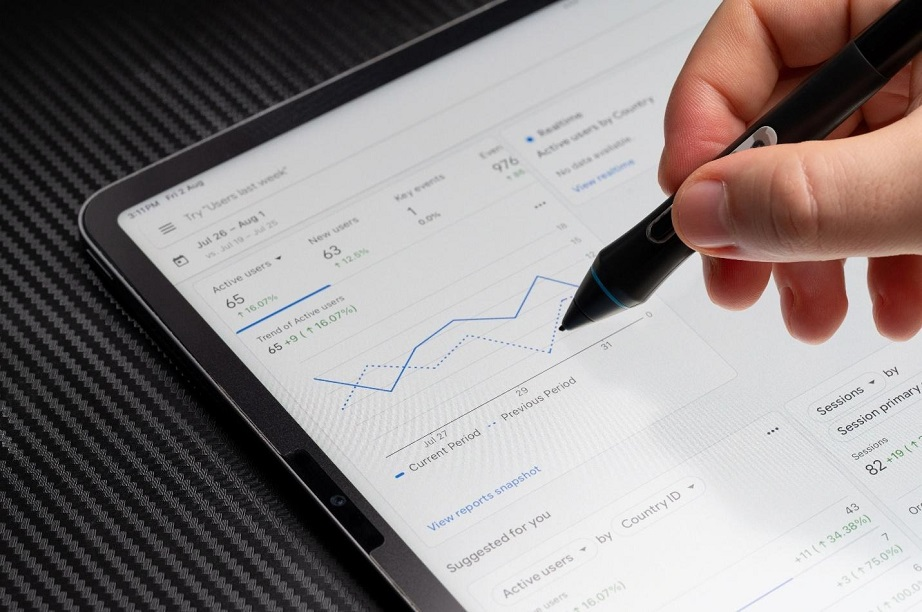
Unlike much marketing spend, Google Ads is measurable from day one. You can see exactly how much you spent, how many people clicked, and whether those clicks turned into real enquiries or sales.
Here are some metrics that you should pay attention to:
Click-through rate (CTR): CTR is the percentage of people who click on a link or ad out of the total number of people who view it. A healthy CTR for search ads ranges from 4% to 7.94%, according to WebFX’s 2026 data.
Conversion Rate: What percentage of people who click actually get in touch or buy from you? The industry average for this is 3.1% to 6%.
Cost per acquisition (CPA): What you’re paying per new customer or lead. You can compare this to what a customer is worth to your business in the long term.
If these numbers are not improving after three months of active management, you might want to restructure or do a thorough review by a Google Ads Expert.
Do You Have to Choose Between Google Ads vs. SEO?
No, absolutely not. Google Ads delivers results today, in real time, but SEO builds organic traffic over time. The smartest approach is to run both simultaneously, even if you are a small business owner in Sydney.
If you’re fairly new to the market, Google Ads, when set up properly and professionally, starts delivering results while you build organic traffic and brand authority with SEO. And once you’ve built a strong brand presence and SEO results become consistent, you will start generating high revenue.
If you’re not sure whether Google Ads is the right option for you, or you’re already running ads that aren’t performing well, get in touch with our team.
We’ll take a look at what you’ve got and tell you what needs to change to get the highest ROI from your ads.
Quick Tip: Before you spend a dollar on Google Ads, make sure conversion tracking is set up properly because, without it, you have no way of knowing which keywords are driving leads and which ones are just costing you money.
